Technology/Fleet Charging

Fleet Charging Software Built Around Your Depot

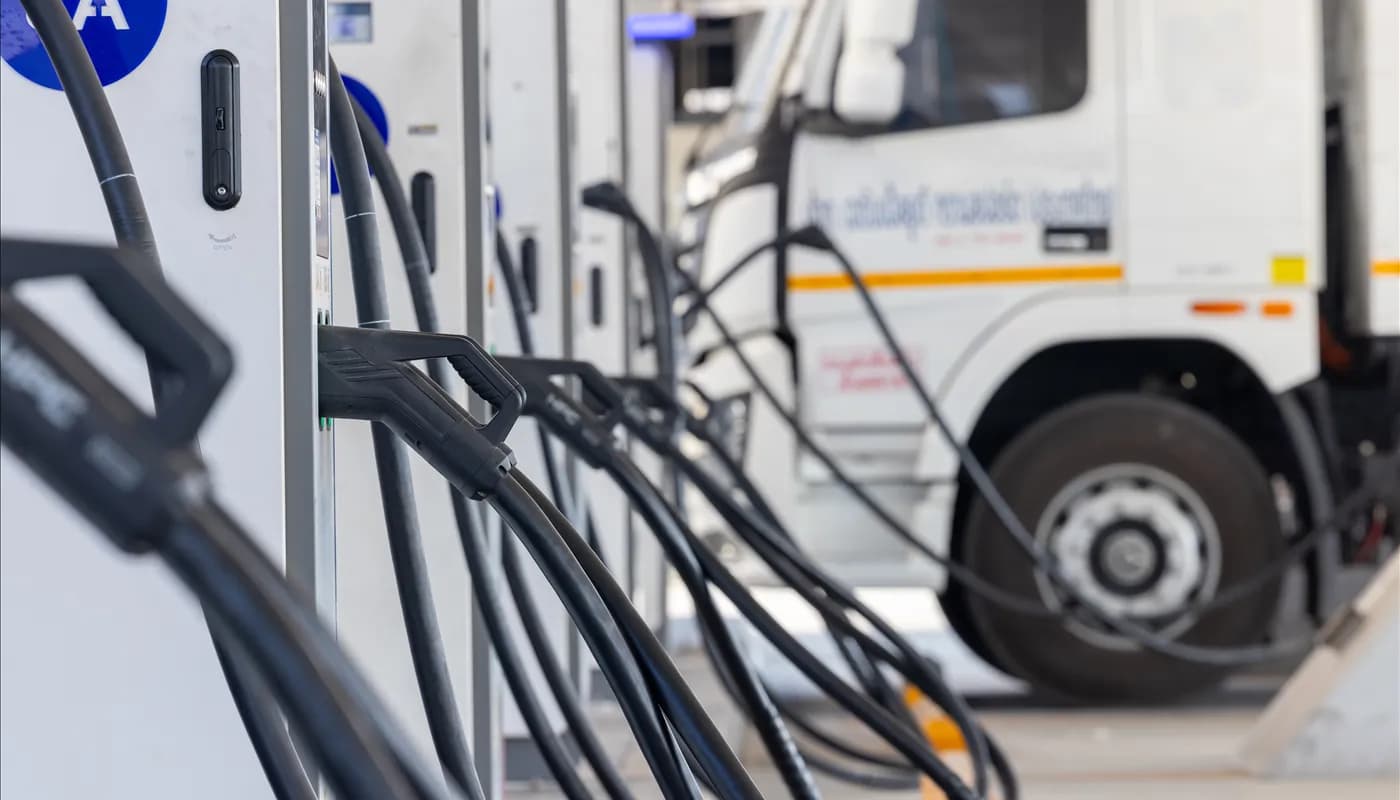
A fleet charging management suite is software that ensures every vehicle in an electric fleet is charged, on schedule, at the lowest energy cost.

01

The fleet problem

Depot power is limited. Departure times are fixed. Energy tariffs vary by hour. Manual charging management works until the fleet reaches maybe 15 vehicles, then breaks. Every morning becomes a triage exercise: which bus has enough charge to run its route, which needs a top-up, which stays home.

02

Track. Every vehicle, every session.

The visibility layer. Which vehicle is on which charger, how long it charged, and how that maps to duty rosters and driver assignments across every depot.

  • Vehicle-charger mapping
  • Driver charging usage tracking
  • Depot and fleet dashboards
  • Charging session attribution
03

Optimize. Fit the depot to the day.

The control layer. Schedules shaped by pull-out times, load balanced within sanctioned demand, tariff-aware so the cheap night window carries as much charging as it can hold.

  • Smart charging schedules
  • Load balancing and peak avoidance
  • Depot energy and transformer protection
  • Charging cost optimization
04

Intelligence. Learn how the fleet actually runs.

The analytics layer. Driver behaviour, route-aware planning, battery health trends per vehicle, and the reports your ESG and finance teams need already assembled.

  • Driver charging discipline detection
  • Route-aware charging planning
  • Battery health correlation analytics
  • Fleet ESG and carbon reporting
05

Depot load management explained

Static allocation gives every charger a fixed share of the site's sanctioned load. Dynamic allocation continuously redistributes power based on which vehicles need it most, driven by departure time and SoC deficit. Static is safe but wastes headroom. Dynamic lets you run 2-3x more chargers on the same site supply. We build both, defaulting to dynamic with fallback rules.

06

Vehicle and charger agnostic

Works with any OCPP charger. Reads vehicle SoC via OCPP MeterValues (energy delivered) or via telematics APIs (actual battery SoC) where the vehicle exposes it. e-buses with proprietary telematics: we integrate. Logistics fleets on mixed vehicle brands: we integrate. Charger vendor stays a hardware decision, freed from platform-compatibility constraints.

07

India-specific realities

DISCOM sanctioned load contracts are inflexible; the scheduler treats them as hard constraints. Time-of-Day tariffs vary by state and DISCOM; presets included for major utilities (BESCOM, MSEDCL, TSSPDCL, etc.), extensible for others. GST-compliant reporting for fleet operators charging their own vehicles is not just possible but the default output.

FAQ

Questions we get most.

What is EV fleet charging management software?

Software that schedules and controls charging for a fleet so every vehicle meets its departure time with the required state of charge, while keeping total depot load within sanctioned demand and shifting energy use to cheaper tariff windows.

How does depot load management work?

The suite continuously allocates available site power across active chargers. Vehicles closest to departure get priority, others charge slower or wait. This lets a depot run more chargers than its sanctioned load would support if all charged at full power simultaneously.

Can it integrate with our telematics or route planning system?

Yes. We build to spec, so integrations with telematics for live SoC, and route or duty rosters for departure times, are part of the scope. Common integrations include GPS/telematics APIs and dispatch systems.

What does fleet charging software cost?

As a build-to-spec platform there is a one-time build cost and no per-vehicle SaaS fee. Total cost depends on modules; a core scheduler with load management is the typical starting scope. Request an estimate with your fleet size and depot count.

Every vehicle charged for the morning pull-out.

Tell us about your depot and fleet. Let's get on a call.

Get an estimate